

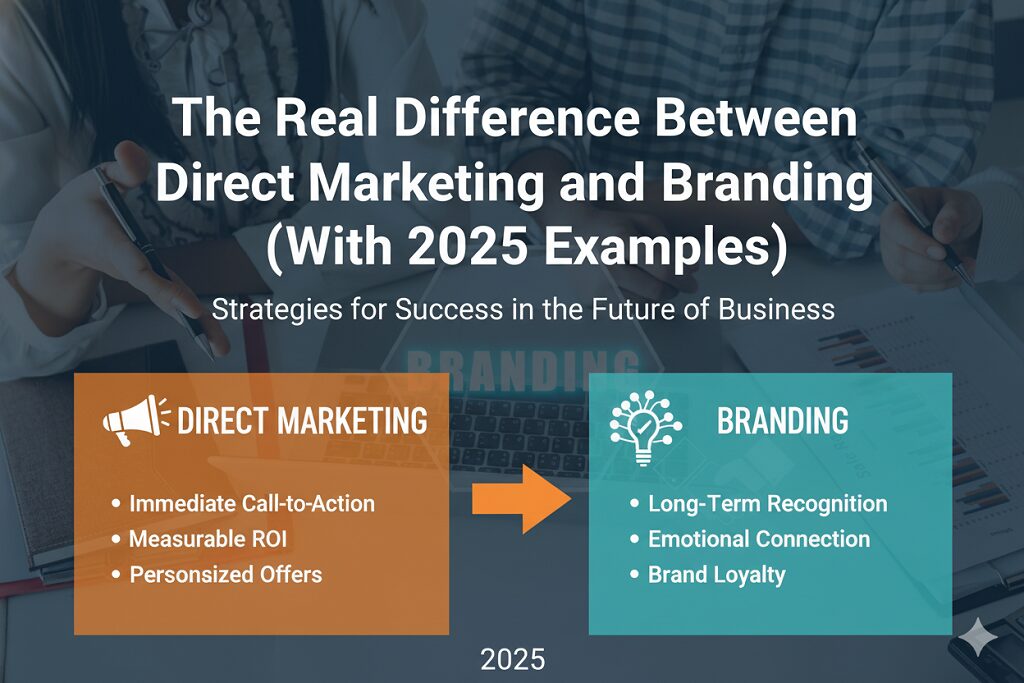
Many marketers confuse direct marketing with branding, and confusing them can waste budgets and time. Here is the difference between direct marketing and branding in plain terms. Direct marketing drives short-term actions like sales, sign-ups, or booked demos. Branding builds long-term identity, trust, and customer preference. Both matter, but they work on different clocks and use different playbooks.
This guide highlights the core differences in objectives, timelines, metrics, audiences, creative style, risk, budget, channels, and how to combine them. It helps small business owners, marketing managers, and students choose smarter strategies. Consider adding a simple infographic to visualize the contrasts side by side for quick reference.
Brands that balance quick wins with trust building grow faster and spend smarter. The sections below show how to do that, with examples and 2025 trends like AI-driven personalization and sustainability storytelling.
Key Differences Between Direct Marketing and Branding

Photo by Eva Bronzini
Below is a quick comparison to anchor the discussion. Think of direct marketing as a sprint to get a response, and branding as the training plan that builds the athlete.
| Dimension | Direct Marketing | Branding |
|---|---|---|
| Objective / Goal | Immediate action, leads, sales | Long-term preference, loyalty, reputation |
| Time Horizon | Days to weeks | Months to years |
| Measurement / Analytics | ROI, CPA, CTR, conversion rate | Awareness, recall, sentiment, share of voice |
| Audience Targeting | Ready buyers and high-intent segments | Broader groups, future buyers, communities |
| Creative / Messaging Style | Clear offer, strong CTA, personalization | Story, values, identity, emotional cues |
| Budget & Risk | Lower cost, adjustable quickly | Larger investment, slower feedback |
| Channels / Tactics | Email, SMS, direct mail, paid search, landing pages | PR, brand campaigns, sponsorships, social storytelling, design systems |
| Integration / Hybrid Use | Converts demand now | Creates demand over time |
Two timely trends shape both sides in 2025. Direct efforts get smarter with AI-first personalization and omnichannel orchestration. Branding sharpens around sustainability and authentic stories that invite user-generated content. For a concise perspective, Jason Falls puts it well: “Direct response marketing helps people buy. Brand marketing helps people choose.”
For small businesses, this means running targeted email or search ads to generate cash flow, while building a simple, consistent brand story that earns trust. A comparison chart works well here as a visual cue for teams and clients.
Objectives and Timelines in Direct Marketing vs Branding
Direct marketing is built for quick wins and clear asks. A startup might send a 20 percent off email to a segmented list or run a retargeting ad with a demo CTA. The goal is speed, proof, and cash in the door.
Branding invests in the long game. It focuses on reputation, recognition, and meaning. It is the steady drumbeat that makes people prefer one company over another when choices look the same. Growth-minded teams treat branding like compound interest, slow at first and powerful over time.
How Metrics and Audience Targeting Differ
Direct response marketing vs branding uses different scoreboards. Direct marketing tracks numbers the team can check daily, such as CTR, conversion rate, cost per lead, and ROAS. Tools make this accessible for small businesses, so even a lean team can monitor performance.
Brand metrics are more qualitative and trend-based. They include awareness, sentiment, brand lift, and customer preference. Surveys, interviews, and social listening help here. Targeting also differs. Direct goes after ready buyers. Branding speaks to broader groups, including future buyers and community advocates.
Creativity, Risks, and Budgets Compared
Direct creative is simple and tactical, with an offer, proof, and a clear CTA. The risk is lower because teams can pivot fast. This is a practical fit for limited budgets or agencies advising clients with short runways.
Branding creative aims for an emotional story. It shapes visuals, voice, and values. The risk is higher because results show slowly and require consistent investment. A helpful lens is to fund direct for momentum and branding for staying power.
Suggested sub-visual: a small pros and cons table makes the tradeoffs concrete during client reviews.
Pros, Cons, and When to Use Direct Marketing vs Branding
A balanced plan uses both. The mix depends on goals, runway, and data maturity. Here are the essentials to help teams decide when to use direct marketing vs branding, with integration tips that keep messages aligned.
- Direct marketing pros: immediate results, cost effective, easy to test, data rich.
- Direct marketing cons: can feel pushy, short-term focus, easy to over-target.
- Branding pros: loyalty and pricing power, better word of mouth, long-term growth.
- Branding cons: slower to show results, higher cost, harder to measure precisely.
Common pitfalls include over-targeting with direct and drifting off-message with brand campaigns. Keep a shared brand voice, even in promo emails. A simple line such as “Same-day shipping, same trusted quality” ties the offer to the brand promise.
For a deeper strategy overview, readers can review broader digital trends that affect both sides here: Importance of Digital Marketing for Business Growth.
Pros and Cons of Each Strategy
- Direct marketing advantages/disadvantages:
- Advantages: fast feedback, controllable spend, clear testing. Example: a local gym runs a 7-day trial ad, then scales the top ad set.
- Disadvantages: ad fatigue, short-term mindset, list burnout. A fix is to rotate offers and keep value-led messages in the mix.
- Branding strategy benefits:
- Benefits: preference, trust, and a moat against price wars. Example: a coffee roaster highlights farmer partnerships and eco packaging to justify premium pricing.
- Challenges: time and budget. Teams often question measurement. Directional KPIs like brand search growth and share of voice help close the gap.
Choosing the Right Approach or Combining Them
A hybrid plan often wins. Use brand stories to attract, then use direct to convert. In 2025, AI helps direct marketing target the right people with personalized offers, while brand stories focus on authenticity, sustainability, and community proof. Short videos, UGC, and live chat create human connections that support both efforts.
- Start brand-first when entering a crowded market with a new promise.
- Go direct-first when the product is validated and the team needs cash flow.
- Blend both for steady pipeline, stronger LTV, and healthier CAC.
Reference for key differences and trends: a 2025 guide to the topic highlights immediate action vs long-term equity and the growing role of authentic connection, see Direct Marketing vs Brand Marketing: Key Differences.
Real-World Examples and Tips to Get Started
- Example: direct email campaign
- A boutique skincare brand sends a 48-hour “first purchase” email with a simple quiz and personalized product bundles. The CTA is “Get your routine.” Segmentation and timing drive quick conversions.
- Example: brand storytelling campaign
- A regional outdoor gear shop shares customer trail stories, local cleanup events, and repair-first values. The story supports premium pricing and in-store workshops.
Tips to act now:
- Audit the current mix. Tag every channel as direct, brand, or hybrid.
- Start small tests. Allocate a weekly test budget and rotate offers and creatives.
- Measure and adjust. Track direct response weekly. Track brand lift monthly with simple surveys and brand search trends.
- Align voice. Keep promos, content, and service scripts in the same tone.
For broader context on planning and analytics, see Direct Marketing vs Brand Marketing.
Frequently Asked Questions About Direct Marketing and Branding
- Is direct marketing part of branding?
- No. They are separate strategies. Direct wins short-term actions, while branding builds long-term preference.
- How do small businesses balance both?
- Keep a base brand cadence, such as weekly social stories, then layer direct promos during launches or seasonal periods.
- What channels fit each approach?
- Direct works well with email, SMS, paid search, and direct mail. Branding fits PR, brand campaigns, social storytelling, and sponsorships.
- How should success be measured?
- Direct response marketing vs branding uses different metrics. Direct uses CPA and ROAS. Brand uses awareness, sentiment, and brand search growth.
- What 2025 trends matter most?
- AI-driven personalization, omnichannel testing, sustainability claims that are real, and user-generated content that builds trust.
How to Decide Which to Emphasize in Your Marketing Mix
Use this quick filter:
- Cash flow need high, runway short: tilt to direct marketing for 60 to 80 percent of spend.
- Market crowded, pricing pressure high: increase branding to build preference and reduce price sensitivity.
- New product launch: seed brand story first, then add direct to convert interest into trials and sales.
- Limited data: begin with direct tests to learn quickly, then invest in brand based on what buyers value.
Anchor choices in context. The right balance depends on goals, audience readiness, and the team’s ability to create consistent, honest stories at a sustainable pace.
Conclusion
The core difference between direct marketing and branding is simple. Direct asks for action now. Branding earns the right to be chosen later. Smart teams use both, treating direct as a controlled engine for response and branding as a steady builder of trust and equity.
Next steps: run a quick audit, choose a hybrid plan that fits the current goal, and track progress with the right metrics on both sides. This approach sets up steady sales today and sustainable growth tomorrow. Share questions or examples in the comments, and help others see what works.
